Your LinkedIn article can end up in ChatGPT's answer to a buyer and your firm can still be missing from the shortlist. That gap, between being cited and being recommended, is where most of the current advice on LinkedIn and AI search goes wrong.
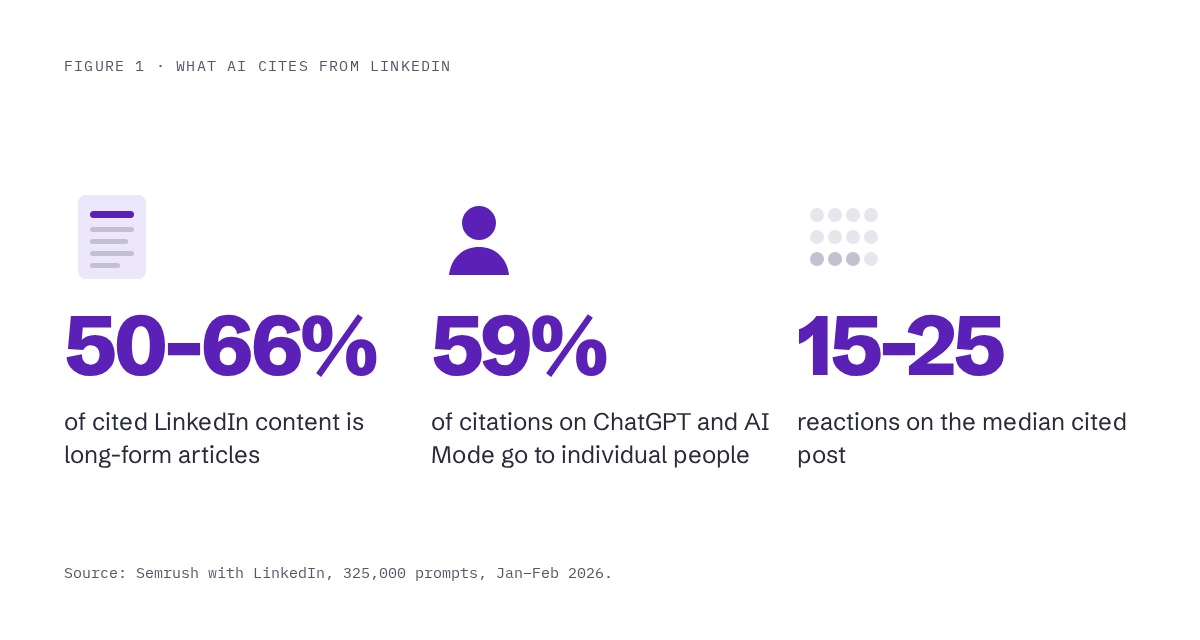
Start with what the research shows. Semrush, working with LinkedIn, ran 325,000 prompts through ChatGPT Search, Google AI Mode and Perplexity earlier this year. LinkedIn was the second most cited website in the answers, behind only Reddit.
What the AI cites is just as telling. Long-form articles made up between half and two thirds of the LinkedIn content it used. On ChatGPT and Google AI Mode, 59% of those citations pointed to individual people rather than company pages. And the median cited post had 15 to 25 reactions. The AI is not looking for what went viral. It is looking for a clear, original answer from someone who appears to know the subject.
So LinkedIn now matters for AI visibility in a way it didn't a year ago. But two things keep that from being the whole story.
Different buyers, different sources
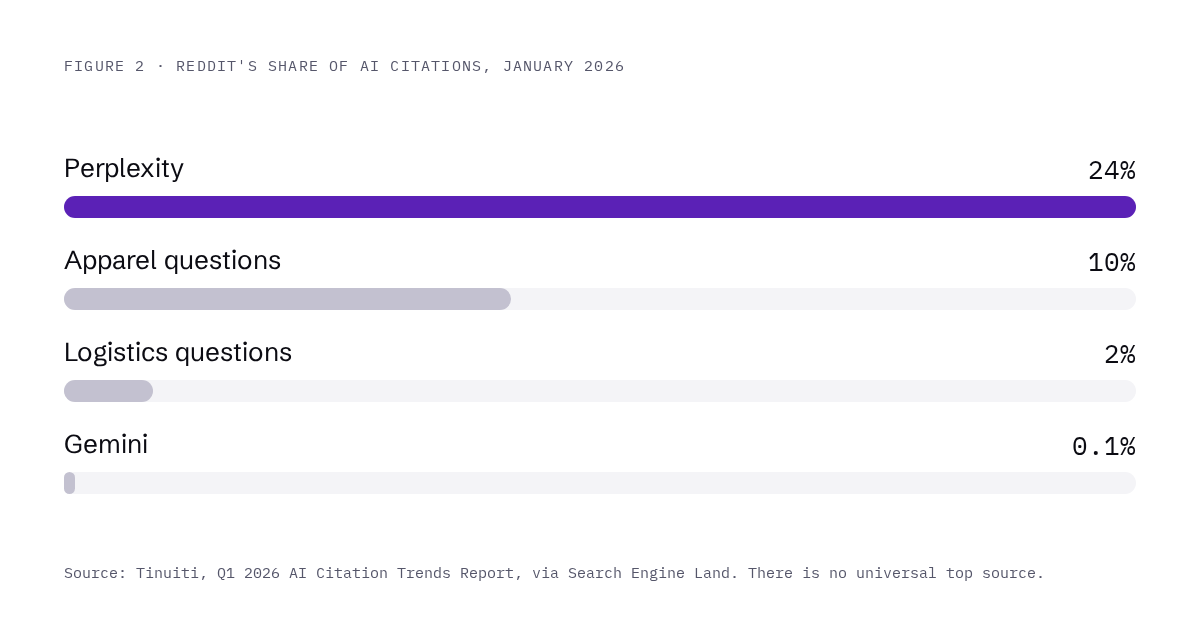
AI does not have one list of trusted websites. Tinuiti's Q1 2026 AI citation report found that Reddit supplied 24% of Perplexity's citations but 0.1% of Gemini's, and 10% of citations for apparel questions against 2% for logistics. Their conclusion was blunt: there is no universal top source.
We have seen the same in our own work. For a luxury goods brand we looked at recently, the AI drew on Reddit threads, retailers and tax-refund pages, and LinkedIn barely featured. The buyers were shoppers, so the AI read what shoppers read. Professional and B2B questions pull in LinkedIn. Shopping questions pull in forums and retailers. The question decides the source.
Cited is not recommended
The second point is the one most commentary skips. Generative Engine Optimisation is about being one of the sources an AI reads and cites. Answer Engine Optimisation is about being named in the answer itself, as a firm the buyer should consider. The research proves the first for LinkedIn. Nobody has yet shown at scale that a firm's LinkedIn articles lead AI to recommend that firm.
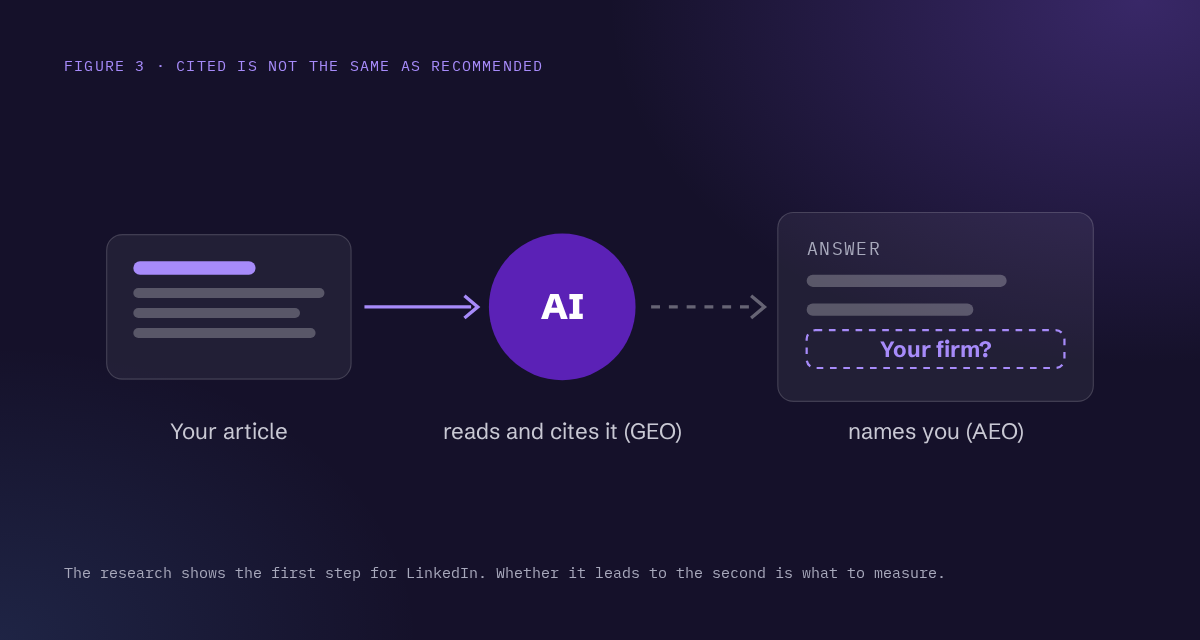
We expect the link holds in many B2B categories. But if you invest in LinkedIn for AI visibility, measure the outcome you actually want: how often AI names your firm when buyers ask the questions that lead to a shortlist. Reactions on the post won't tell you that.
How to write for the answer
If your buyers ask professional questions, these habits make your writing easier for an AI to use and attribute:
Use the buyer's question as the title, in their words. "How should a mid-size insurer in Southeast Asia approach claims automation?" is easier to match than a clever headline.
Answer it in the first paragraph, then explain. The AI often lifts the opening.
Say who you are and what you have done, in the article itself. Citations favour named experts with relevant experience.
Be specific about market, size and context. General advice competes with everyone. Specific advice has few rivals.
Write regularly. Three quarters of cited authors had posted at least five times in the previous month.
Keep the company page factual: what you offer, to whom and where. Perplexity leans on company pages more than the others.
None of this needs a large following. It needs you to know what your buyers ask and to answer it better than anyone else.
What the data can't tell us
LinkedIn worked on the Semrush study. Most of this data dates from early 2026, and AI platforms change how they source answers month to month. Treat it as a strong signal, and check it against your own buyers' questions.
So before you judge your next post by its reactions, ask a different question. Would a buyer's AI quote it, and would it name you when it did?
Sources