
Where do AI answers come from?
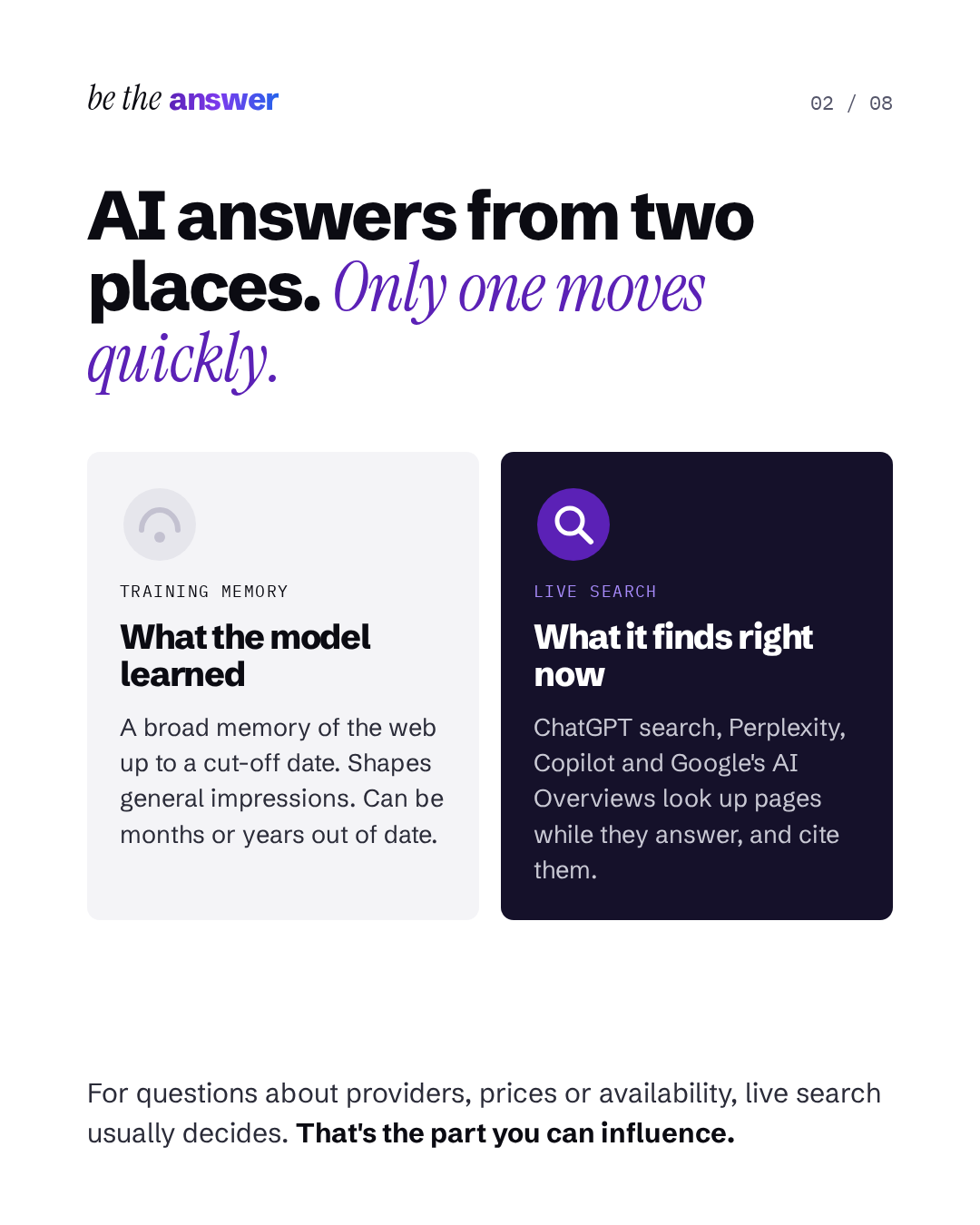
There are two sources. The first is the model’s training: a broad memory of the web up to a point in time. It shapes general impressions of well-known brands, but it can be months or years out of date. The second is live retrieval: many assistants, including ChatGPT search, Gemini, Claude, Perplexity and Google’s AI Overviews, search the web while answering and cite pages. For questions about current providers, prices or availability, retrieval usually matters most, and it’s the part you can influence quickly.
What do they look for when they search?
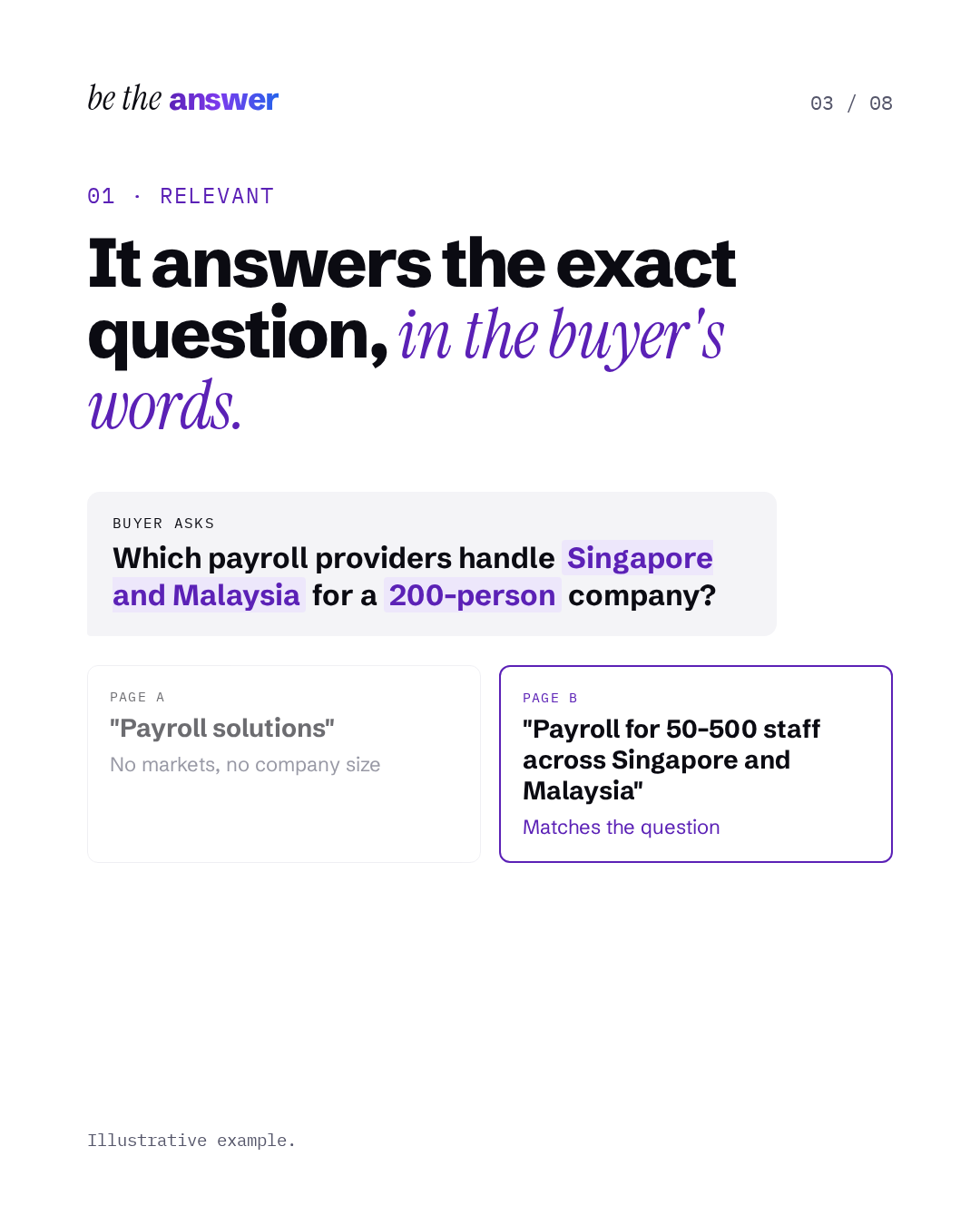
- Relevance
Pages that answer the exact question, in the words the buyer used.
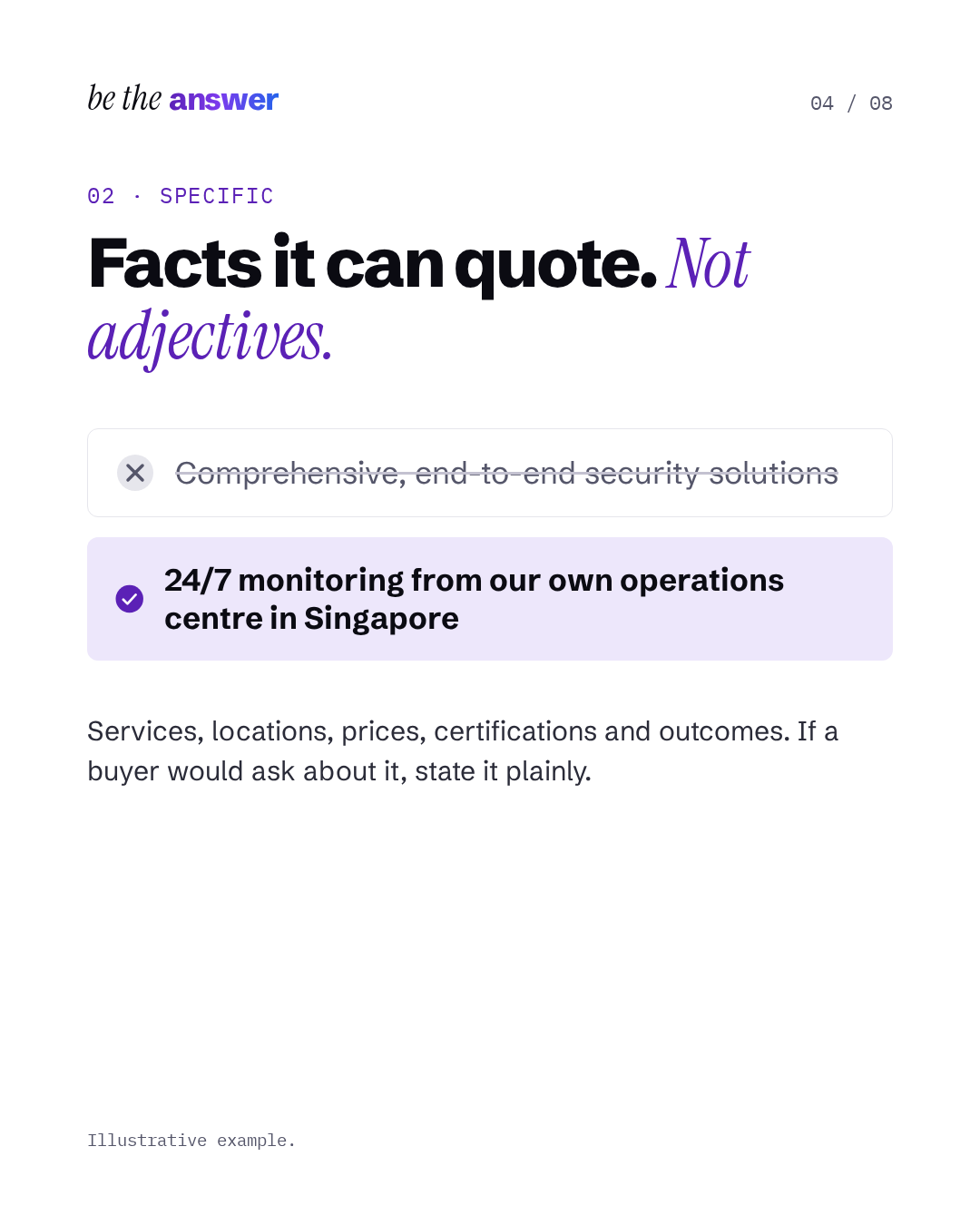
- Specificity
Concrete facts: services, locations, prices, certifications and outcomes.
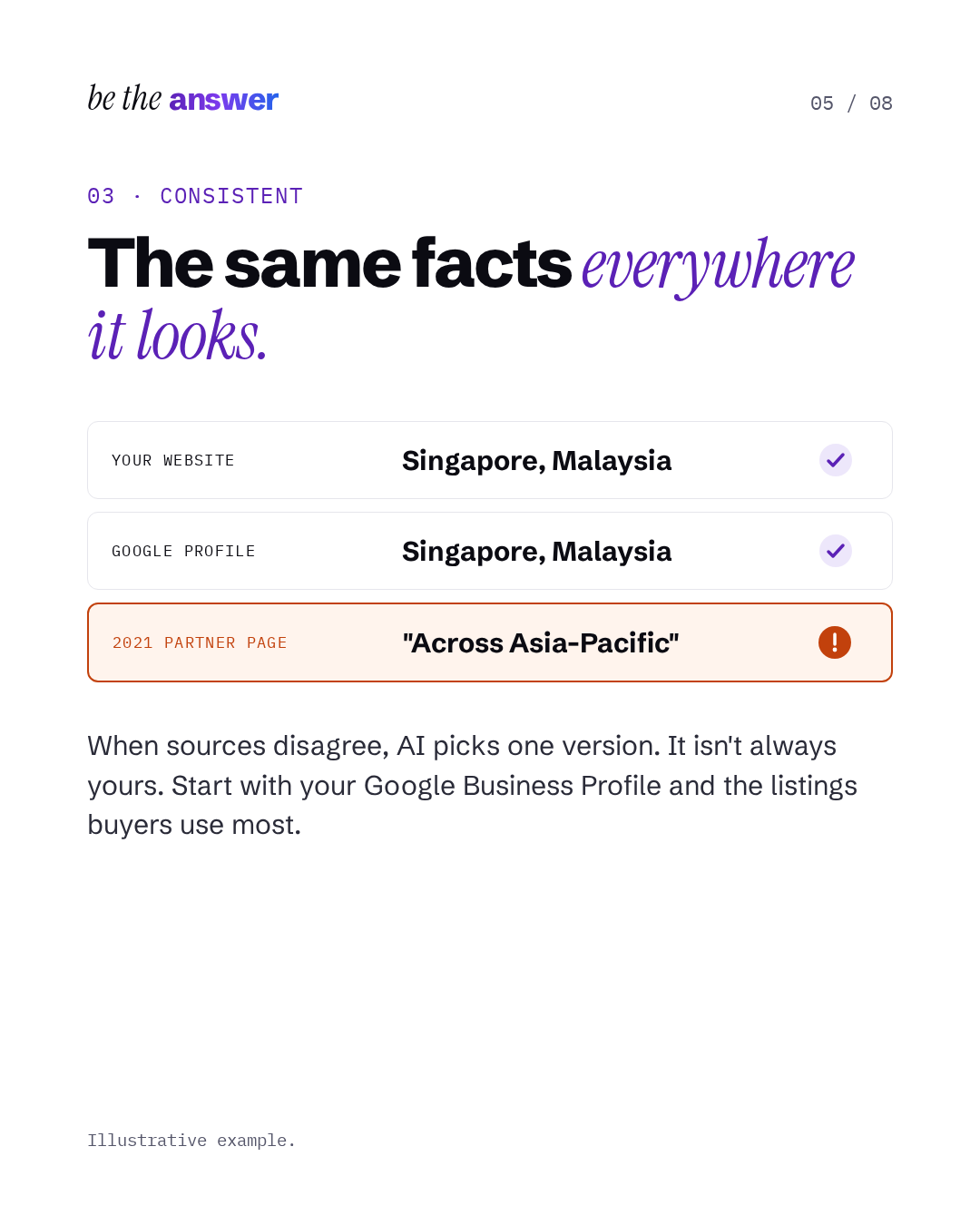
- Consistency
The same facts on your site, your listings and other people’s pages.
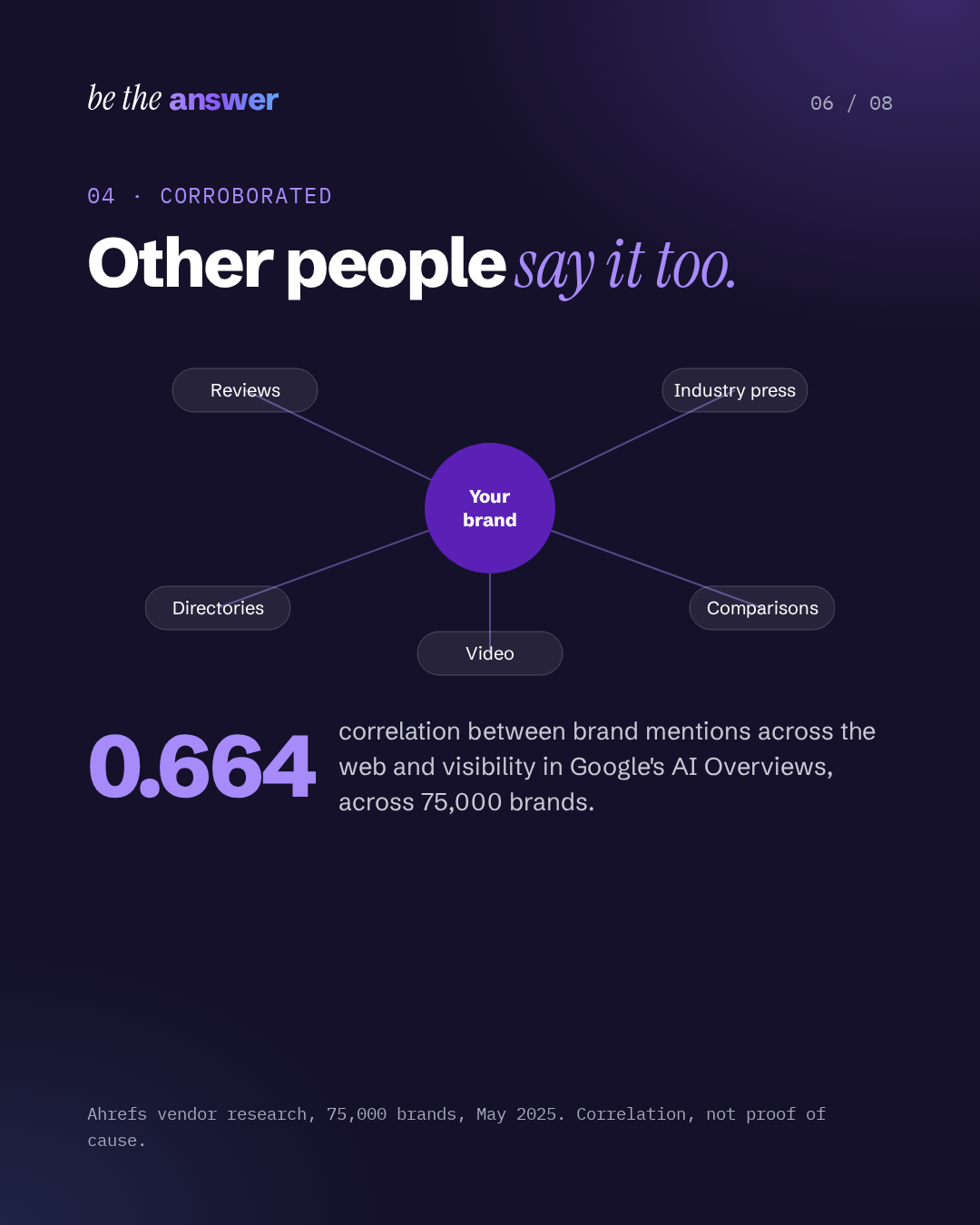
- Corroboration
Independent sources (reviews, directories, press) that confirm what you say.
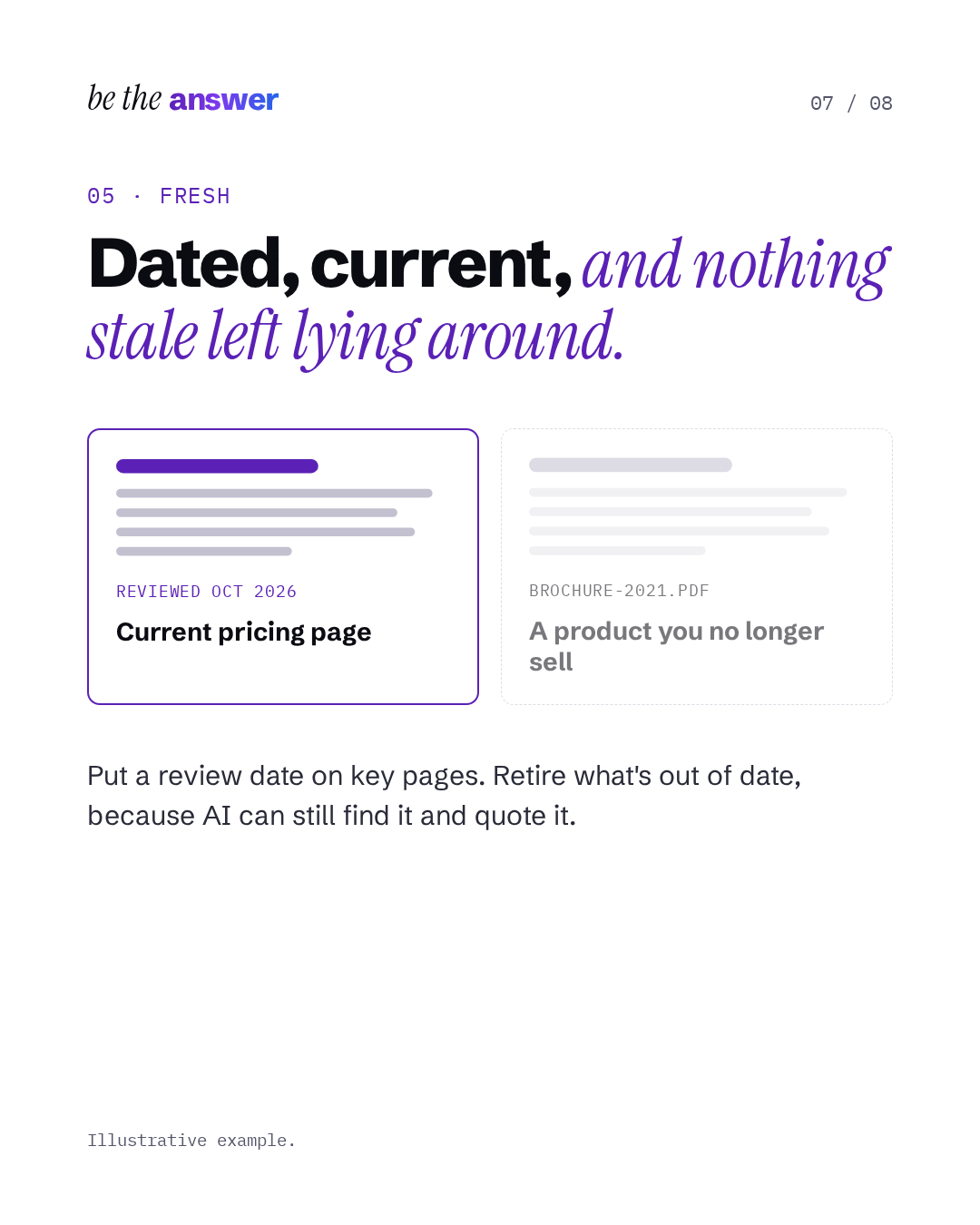
- Freshness
Dated, current pages, especially for anything that changes.
Why don’t the biggest brands always win?
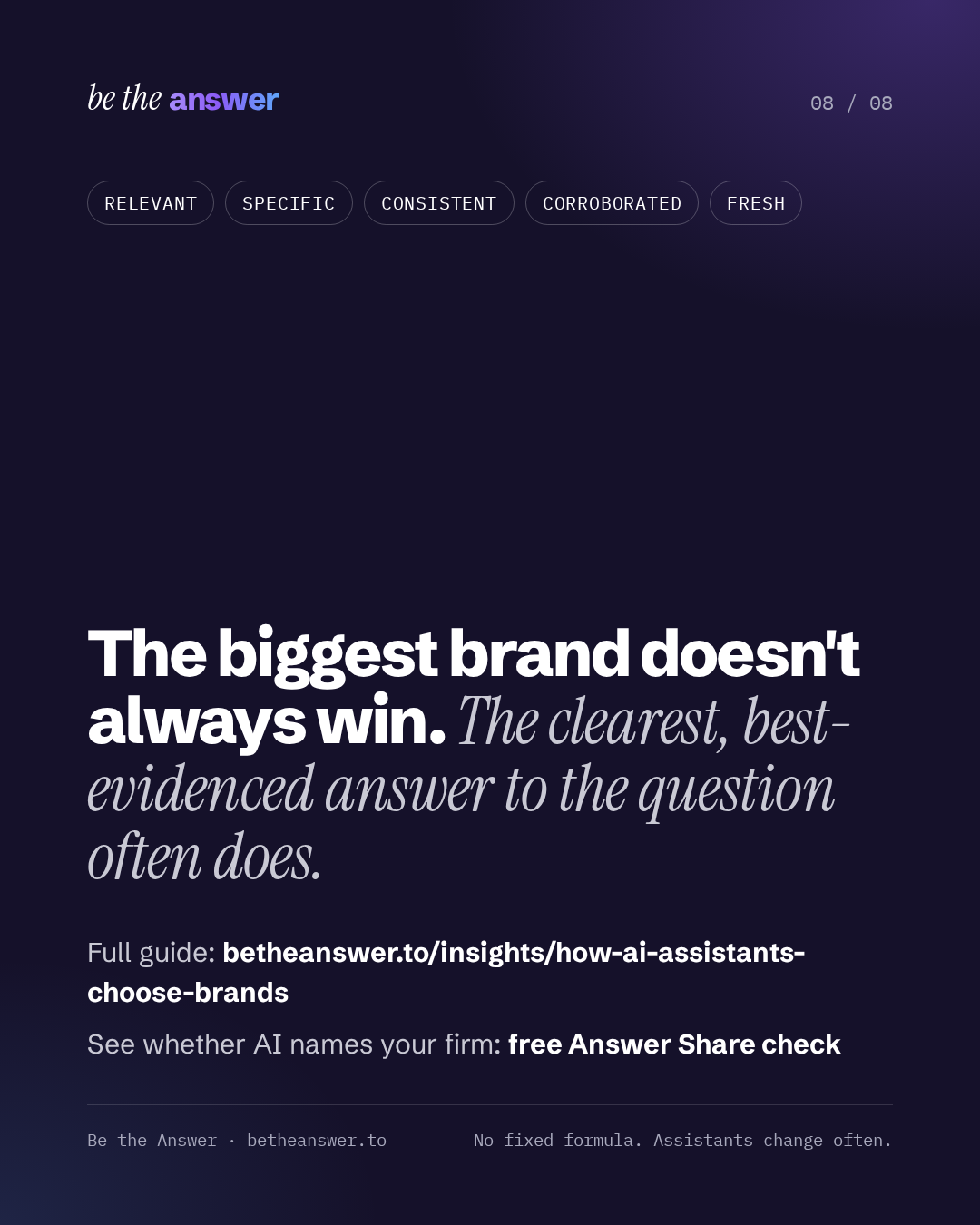
Size helps, but it isn’t the whole story. For specific questions (a particular city, sector or use case), a smaller company with a clear, well-evidenced page can be named ahead of a larger one with a vague page. Assistants are trying to answer the question in front of them, not rank companies by size.
What does the research say?
Vendor researchLarge studies by analytics vendors point the same way. Ahrefs found that adding schema markup to pages already cited by AI didn’t increase citations, and that link-based authority metrics barely predicted which domains AI mentions. What other sites, communities and videos say about a brand appears to matter more. In separate 75,000-brand studies, brand mentions correlated at 0.664 with AI Overview visibility, while YouTube mentions had a 0.737 correlation with visibility across ChatGPT, AI Mode and AI Overviews. These are correlations, not proof, but they’re a useful corrective to purely technical advice.
What should you do about it?
- Write for questions
Write pages around the questions buyers ask, not around your org chart.
- State the facts
State your key facts plainly and date them.
- Make details identical
Make your details identical everywhere, starting with your Google Business Profile.
- Publish proof
Publish proof: case studies with outcomes, and recent reviews.
- Check regularly
Check what AI says about you regularly, because answers change.
- Earn mentions
Earn mentions where buyers and AI look: reviews, comparison articles, industry press, forums and video.
What nobody can promise
There is no fixed formula. Each assistant works differently, they change often, and the same question can get different answers on different days. That’s why we measure on the same questions over time rather than chase a single result.
Frequently asked questions
Can I pay to be recommended by ChatGPT?
Not in the organic answer. Some platforms are testing advertising, but the answer itself is built from what the assistant can find and trust.
Does SEO still matter?
Yes. Many assistants search the web, so being findable still matters. But being findable isn’t the same as being named and described correctly.
How quickly can things change?
Fixes to your own pages can be picked up quickly by assistants that search the web; what models learned in training changes more slowly.